
 русский
 Español
 Português


Read More

Product Category
NEW Category
Contact us
Inside Our Artificial Flower Factory: From Petal Punching to Container Loading
Container Loading at the Factory
Loading is done at our own facility, so the same team that packed the cartons also stacks the container. Cartons are loaded by weight distribution and stacking strength, with fragile items kept away from the door and heavy planters placed at the bottom, then the container is sealed and recorded.
What You Receive
Loading photos and carton counts are provided with every shipment, and the container number and seal number are passed to you before departure. This makes it easy to reconcile the packing list on arrival and to file a claim quickly if transport damage occurs.
Full Container, LCL or Air
We ship full containers, LCL mixed containers for buyers testing several designs, and air freight for urgent samples. Goods depart from major Chinese ports near Zhejiang with frequent sailings to main ports worldwide. Send your item list and we will return volume, weight and freight estimates per option.
Warehouse: Materials In, Finished Goods Out
Our warehouse separates incoming raw material from finished goods so production and dispatch never compete for the same space. Fabric, plastic components, pots and cartons are held as buffer stock for running programmes, while finished cartons are stacked by order and marked for loading.
Why Buffer Stock Matters
Holding material for repeat references shortens the lead time on reorders: a repeat order often does not have to wait for a fresh fabric run. It also lets us combine several designs into one container without waiting for the slowest item, which is useful when a first container mixes multiple styles toward the same total quantity.
Before Dispatch
Each outbound lot is counted, checked against the packing list and photographed before it leaves. Carton marking, barcodes and palletising can follow your specification. Send us your consolidation plan and we will confirm what can ship together.

Plant Potting Assembly: Stable, Clean, Shelf-Ready
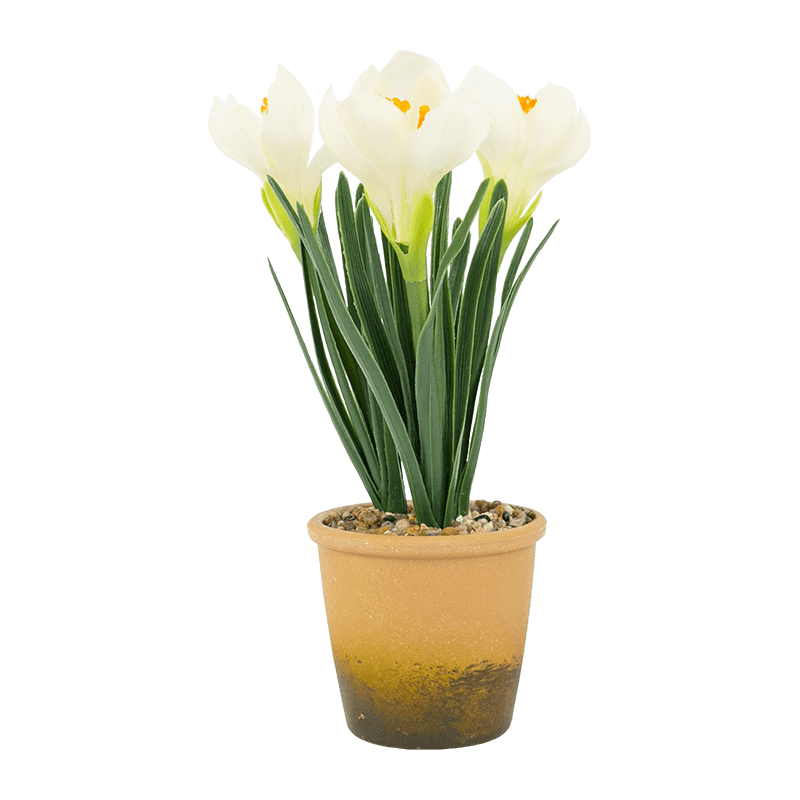
Potted plants and succulents are assembled on a dedicated line: the pot is filled and weighted, the plant is set at the correct height and angle, and the soil surface is finished so it looks natural and stays in place during transport. This is the step that decides whether a potted item arrives upright or leaning.
Details We Control
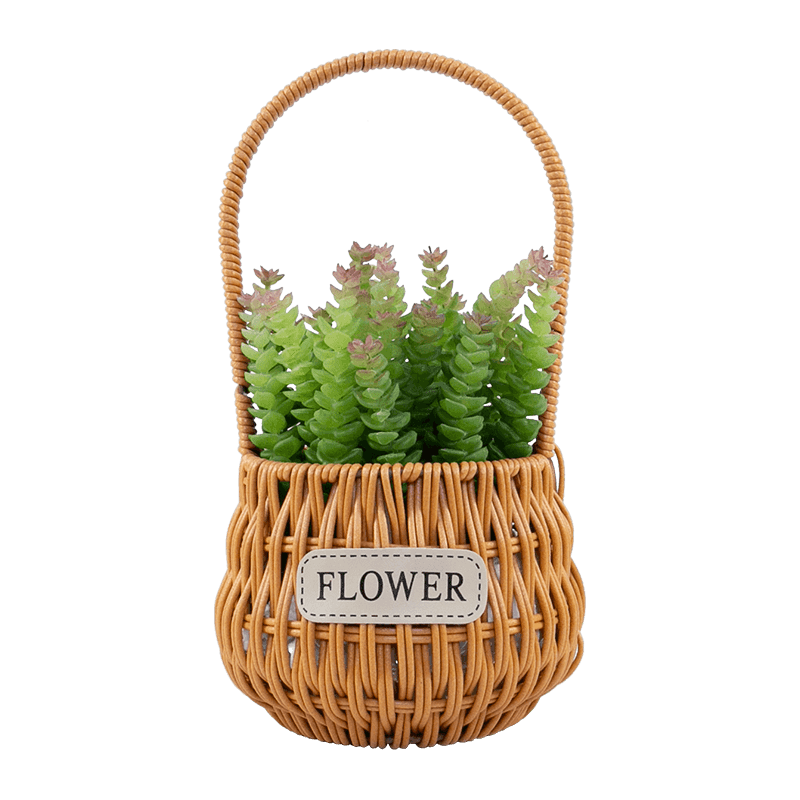
Pot stability, fill weight, foliage distribution and surface finish are checked against the approved sample. Planters can be supplied in ceramic, cement, PP, iron or basket styles, and we can match a pot colourway to your private label.
Retail and E-commerce Packing
For shelf display, pots are packed to arrive clean and undamaged with barcodes and labelling applied per your specification. For marketplace sellers, we can supply individual mail-order boxes that protect the foliage through the last mile. Tell us your channel and we will quote the packing option that fits it.
Assembly Workshop: 60+ Skilled Workers
The assembly floor is where finished components become a sellable unit: heads and foliage are mounted, pots are filled and stabilised, trees are dressed branch by branch, and each item is cleaned and checked. More than 60 trained workers run these lines, and teams are assigned by product type so experience stays on the same reference.
Three-Stage Inspection
Every bulk order passes incoming material checks, on-line inspection during assembly, and a final random inspection before packing. Colour fastness, stem strength, glue points and pot stability are checked against the approved sample. For OEM programmes we keep signed golden samples on file so repeat orders match season after season.
Buyer Verification
Buyers are welcome to audit the line in person, or to appoint a third-party inspector such as SGS, Bureau Veritas or TUV before shipment. Production photos and packing details can be shared while your order is running. Arrange an audit or inspection.
Injection Moulding: 30 Machines and Our Own Tooling
Around 30 injection moulding machines produce the plastic components we need — pots, planters, bases, connectors, leaf moulds and tree trunks. Holding this step in-house is the main reason we can develop new references quickly and keep unit cost stable across repeat seasons.
New Moulds and Custom Parts
Our mould shop builds new tooling for OEM projects: a pot shape, a branded base, a planter size matched to your shelf or a connector for your own assembly line. Sample parts can usually be produced for evaluation before you commit to the full quantity.
Material Options
Standard production uses PE, PVC and polyester fabric; recycled or specific-compliance materials can be discussed for markets with defined requirements, and test reports can be arranged before mass production. See our product range or send your drawing for a moulding quote.
Stem Forming: The Part Buyers Bend and Twist
The stem is what a shopper touches first and what a store assembler bends into an arrangement. Our stems are formed from wire core with PE or PVC coating, then finished to the required length and thickness for each reference — from thin single stems to thick tree trunks.
What We Check
Stem strength, coating adhesion and bend recovery are tested during production. A stem that cracks when bent, or that will not hold a curve in a vase, is the most common reason for retail returns, so bend tests are part of the on-line inspection rather than an afterthought.
For Different Channels
Supermarket and garden-centre buyers usually want stiff stems that stand in a bucket display; e-commerce sellers want stems that survive being folded into a mail-order box; decoration companies want extra-long stems for large arrangements. Tell us the channel and we will recommend the stem specification. Contact our export team to discuss your programme.
Flower Setting Machines: 20 Lines for Steady Output
Our workshop runs around 20 flower setting machines, where punched petals, leaves and pistils are assembled onto stems and fixed by hand-assisted setting. This is the step that turns flat fabric into a finished spray, bush or single stem, and it is the largest single capacity block in the factory.
Capacity Planning for Wholesale Buyers
Because setting is done on our own lines, we can schedule bulk orders flexibly and keep spare capacity for urgent or repeat shipments. Typical production lead time is 25–40 days after deposit; seasonal programmes such as Christmas trees should be booked 2–3 months ahead so vessel space and peak-season slots are secured.
On-Line Inspection
Flower setting is also the second checkpoint in our three-stage inspection: glue points, stem strength and head alignment are checked against the approved sample while the batch is running, not only at the end. Send us your item list with target quantities and we will confirm the schedule for your season.
Petal Punching: Where Shape and Consistency Start
Petal punching is the first step that decides how realistic an artificial flower looks. Fabric sheets are punched with steel dies cut to the exact petal or leaf shape of each design, then passed to the flower setting line. Because the dies are made and maintained in-house, the same reference keeps the same petal outline season after season.
Why This Matters for Bulk Orders
Hand-cut or outsourced petals vary in size, which shows up as visible size differences once hundreds of stems are packed into one carton. Punching with fixed dies keeps every head within tolerance, so a chain store reordering the same item next year receives goods that match the approved sample. Colour is fixed at the fabric stage, so colourways can be reproduced reliably.
Custom Shapes
For OEM projects we cut new dies for your petal shape, leaf form or private pattern. Send a drawing, a photo or a physical sample and our mould shop will produce a trial batch for approval before mass production starts. See our FAQ for MOQ and sampling, or send us your design for a quote.
Our Factory Building in Zhejiang, China
Zhejiang Hansy Craft Co., Ltd. runs its own artificial flower and plant factory in Zhejiang Province, China — not a trading office. Design, mould making, injection, petal punching, flower setting, assembly, inspection and export packing all happen under the same roof, which is why we can quote factory-direct prices and control lead time ourselves.
What Buyers See When They Visit
A visit normally starts in the showroom, where the current season's artificial flowers, orchids, potted plants, trees, succulents, grass lawn and Christmas items are displayed together, then continues into the workshops and the finished-goods warehouse. You can watch the same line that will run your order, check how petals are punched and set, and review how cartons are stacked before loading.
Plan Your Visit
Buyers who cannot travel can book a live video walkthrough instead and receive HD clips of the lines and selected items. Tell us your product focus before the call and we will have the relevant samples ready. To arrange a visit, a video tour or a sample set, contact our export team, or browse the product catalog first and send us your shortlist.
PREV:Certificates and Audits: What We Provide to Wholesale Buyers
NEXT:Quality Assurance at Hansy Craft: BSCI, FSC and Three-Stage Inspection
NEXT:Quality Assurance at Hansy Craft: BSCI, FSC and Three-Stage Inspection
Interested in cooperation or have questions?


 Ready To Customise
Your Realistic Plants Products?

Product Categories
Quick Links
Contact Us
-
Telephone: +86-15957939205

-
Email: jenny@hansycraft.com

-
Add: No. 185 Xigang Street, Xiaoshun Town, Jindong District, Jinhua City, Zhejiang Province, P.R.China

-
whatsapp: 8615957939205
-
Website: Sitemap
