
 русский
 Español
 Português


News
News
Home / News
News
-
 2026/09/24
Planning a Factory Visit to Zhejiang: A Buyer's Guide
2026/09/24
Planning a Factory Visit to Zhejiang: A Buyer's Guide
For a first-time importer, a factory visit is the single most useful investment of two days. Photographs can be borrowed, websites can be polished, but a production floor cannot be faked for long. This guide explains how to plan a visit to an artificial flower factory in Zhejiang, China, what to prepare, and how to turn the trip into a signed order rather than a sightseeing tour.
Why Zhejiang Is the Base for Artificial Plants
Zhejiang Province is one of China's main clusters for artificial flowers, plants and home decoration. The region has a mature supply chain for the materials that matter — polyester and silk-like fabric, PE and PVC, plastic pots, foam soil and wire stems — which is why a source factory here can develop new moulds quickly and keep component cost low. Zhejiang Hansy Craft has produced artificial plants in the province since 2010, and our workshop and showroom are open to overseas buyers by appointment.
Before You Travel: Three Preparations
First, build a shortlist. Pull the item numbers or reference images you want to see and send them ahead so the samples are pulled before you arrive. Second, define your commercial frame: target retail price, packaging level, expected annual volume and destination port. Third, confirm the practical details in writing — the factory address, the contact person, the date, and whether the trip includes a showroom visit, a production line walkthrough or a sampling session. Buyers who arrive with a shortlist and a price target usually leave with a quotation they can act on.
What You Will See on the Floor
A well-run artificial flower factory is organised around five stages: mould making and injection, flower setting, assembly, quality inspection and export packing. Our factory page describes the equipment behind each stage, including the flower setting machines, frame injection machines and injection moulding machines that produce our own components. Watch for two things in particular — whether components are made in-house or bought in, and whether inspection stations exist as a separate step rather than being folded into packing.
Bring Your Own Sample and Compare
The most valuable thing you can carry to a factory visit is a competitor's sample or your own best-selling item. Put it beside the quotation item under the same daylight, compare petal thickness, colour depth, stem rigidity and the finish at the edges, and ask what material and process each one uses. This comparison is the fastest way to understand where cost differences actually come from, and it usually shifts the conversation from "how much" to "what specification".
Discuss Customisation While You Are There
Custom work is easier to agree face to face. Walk the showroom, pick the pot material and height you want, and ask what can be changed without a new mould — flower species, colourway, pot finish, packaging and barcode labelling can often be adjusted on an existing design. Items that need a new mould should be quoted with a sampling schedule; typical custom sampling takes five to ten days after artwork and specification approval.
Turn the Visit Into a Trial Order
A visit is also the right time to agree a trial order. Many importers start with a mixed container of several designs to test the market before committing to volume. Discuss the MOQ per design and per colour, whether items can be combined to reach it, packaging for your sales channel, and the payment terms for a first order. Confirm the master carton size, pieces per carton and net and gross weight, because those figures drive your freight calculation.
If You Cannot Travel
Not every buyer can visit, and we do not treat a visit as a precondition for working together. We can arrange a live video walkthrough of the workshop and showroom, send HD videos of selected items and courier physical samples to your office. Third-party inspections from agencies such as SGS, Bureau Veritas or TUV are welcome before shipment, and we can provide production photos and packing details throughout the order.
Book Your Visit
Summer and autumn are the busiest visiting seasons, so it is worth booking a few weeks ahead. Tell us your dates, your shortlist and the categories you want to review, and our export team will prepare the samples and a visit schedule. Contact our export team to arrange a factory visit, or read more about quality assurance and buyer verification before you arrive.
-
2026/09/24
New Season Product Development: What Hansy Craft Is Launching
Every season our design team develops new moulds and colourways based on two inputs: what buyers asked for during the previous year, and what is moving in retail markets we follow. This update summarises the product development work behind the current range, so wholesale buyers know what is genuinely new and what has simply been extended to more sizes and colours.
How We Develop a New Item
Product development at a source factory starts with moulds, not with photographs. For a new flower head or pot, our team builds the mould, runs a first-off sample, and checks the result against a real plant for petal count, curvature, colour gradient and stem angle. Once the sample is approved internally, it goes into the seasonal sample file and can be quoted to buyers. Because we produce our own components, a new design is a scheduling decision rather than a sourcing project.
Butterfly Orchids: More Pot and Colour Options
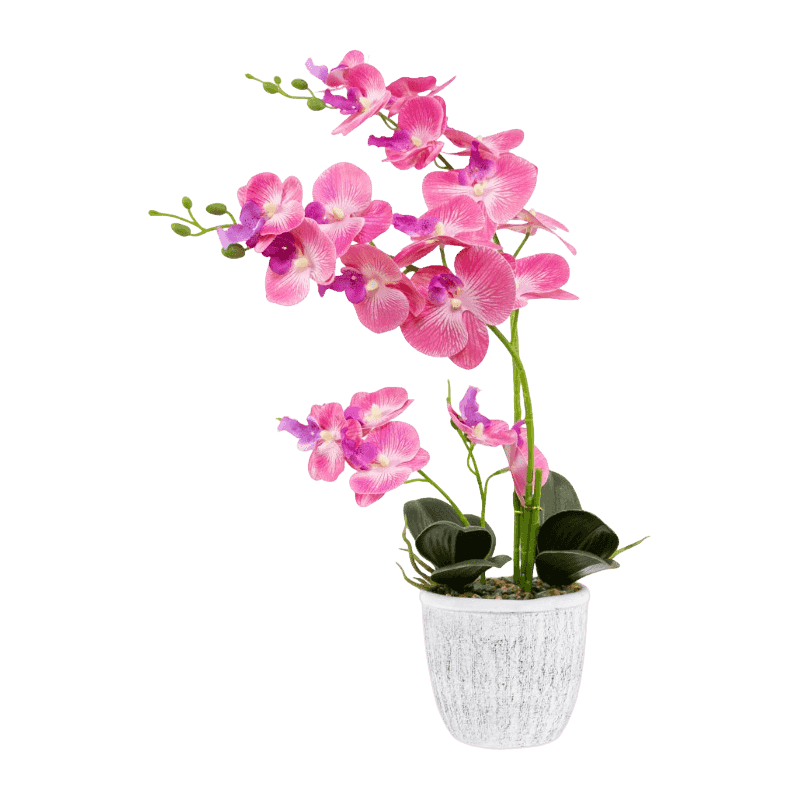
The butterfly orchid range has been one of our fastest-growing categories. The design work this season focused on the pot rather than the flower: ceramic, cement, glass and black or golden ceramic finishes that let the same orchid sit at different price points. Orchids are unusual in artificial plants because the pot is a large part of the perceived value, so giving buyers a choice of pot at a fixed flower specification widens the retail range without a new mould for the flower itself.
Christmas Trees: PE, PVC and Flocked
Christmas planning runs earlier than any other category. The current Christmas tree range covers full PE trees, PVC hinged trees, flocked and snowy finishes, pencil and automatic models, and mixed PE/PVC constructions with different branch counts. Buyers can specify height, tip count, branch construction and base type. Because trees are bulky, the practical conversations are usually about carton dimensions and how many units fit a container — our export team will size a load plan before you commit to quantities.
Grass Lawn and Landscape Items
Artificial grass lawn has moved from a garden-only product into interior and commercial display. The gardenia-leaf construction has proven popular with landscapers because it holds shape and resists fading outdoors, and it is now used in panels and tiles as well as single sheets. For buyers serving the landscaping and event market, this category pairs naturally with our artificial trees for full outdoor schemes.
Potted Flowers, Plants and Succulents
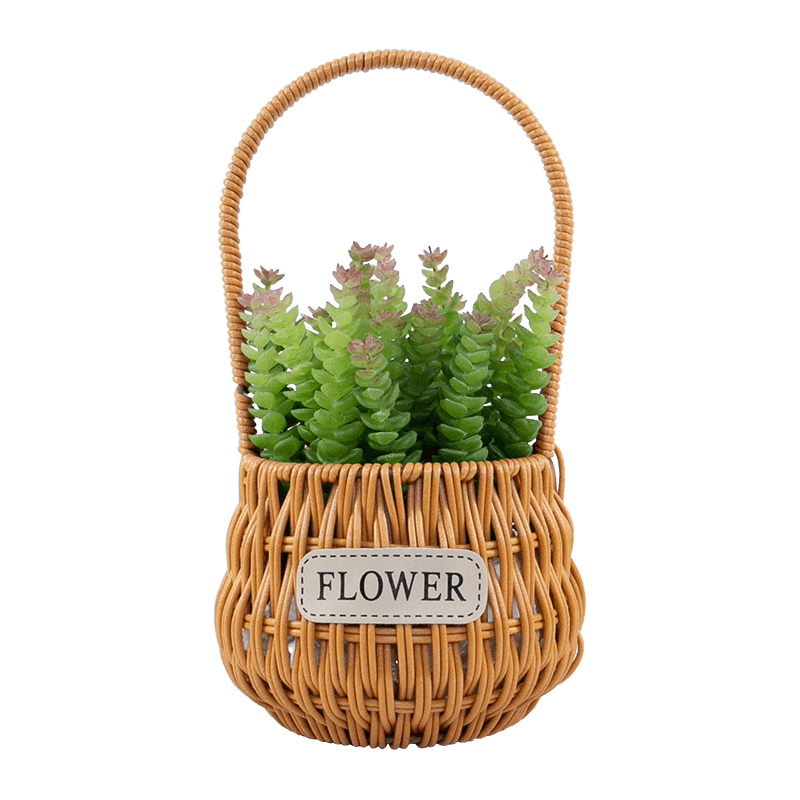
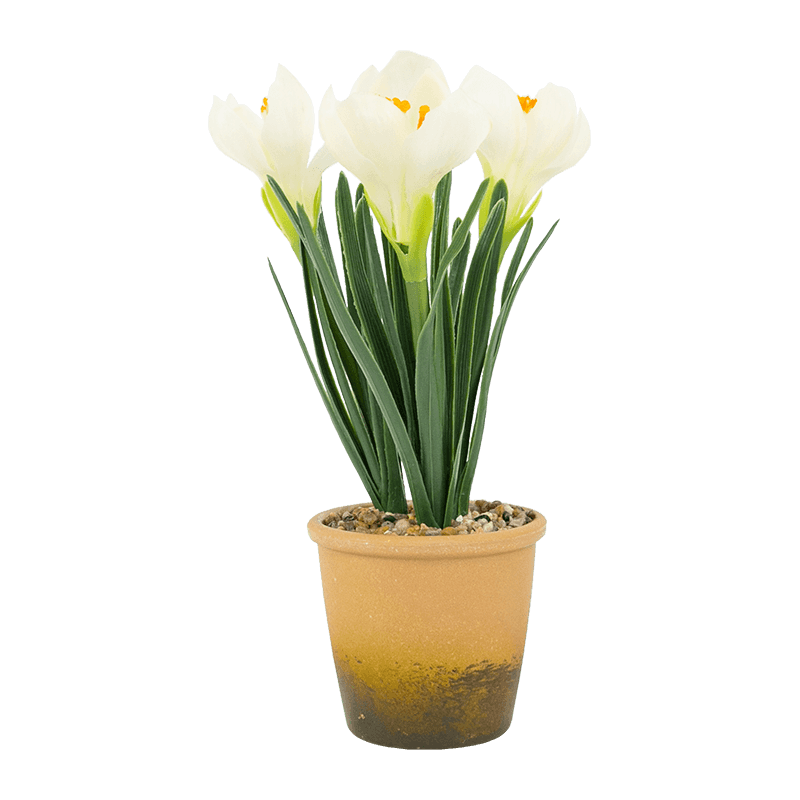
The potted flower, potted plant, snake plant, hanging plant and succulent ranges have been extended with additional heights and pot finishes rather than new species. In practice this is what most importers ask for — a category they already sell, at a size or price point they are missing. Extension work like this is fast because the mould already exists.
Spray and Bush Flowers: Colourway Refresh
In spray and bush artificial flowers, the season's work was mainly colour. Buyers told us that retail buyers were asking for softer, dustier tones alongside the traditional brights, so several best-selling constructions were re-produced in muted palettes. The flower shape is unchanged, which keeps the item number stable for repeat customers while offering a new colourway for the shelf.
What This Means for Your Next Order
A wide, well-maintained catalogue matters most on a trial order, because it lets you fill a mixed container from one supplier instead of splitting freight across several vendors. If you are building a spring or Christmas programme, send us your shortlist and target price and we will match it against the current range, flag which items are new and which are extensions, and quote with sampling times. Contact our export team to request the current catalogue and price list.
-
2026/09/24
Quality Assurance at Hansy Craft: BSCI, FSC and Three-Stage Inspection
For wholesale buyers, quality is not a promise made at the start of a relationship — it is a set of procedures that either exist or do not. This article sets out how Zhejiang Hansy Craft controls quality from incoming material to loading, which external certifications we hold, and what a buyer can verify independently before placing a bulk order.
Certification: BSCI Audit and FSC
Our factory has passed a BSCI social compliance audit and holds FSC certification for wood-based and paper packaging components. These are the two documents overseas importers most often ask for when onboarding a new supplier, because they cover different risks: BSCI addresses working conditions and factory management, while FSC covers the source of fibre-based materials. Certificates are available on request, and we can arrange a buyer's own audit or a third-party inspection appointment.
Three-Stage Inspection on Every Bulk Order
Quality control at our factory runs in three defined stages. First, incoming material checks confirm that fabric, PE and plastic arrive to specification before production starts. Second, on-line inspection during flower setting and assembly catches defects while the batch is still open, when a correction is cheap. Third, a final random inspection before packing checks the finished goods against the approved sample. Colour fastness, stem strength, glue points and pot stability are all part of the final check.
Golden Samples: The Reference Behind Repeat Orders
The most common quality complaint in artificial plant trade is drift between the first order and the fourth. Our defence is the golden sample: for every OEM item, we sign and retain a physical reference sample and record the approved colour swatch in the production file. When the item is produced again a year later, the reference sample is the standard, not a photograph or a memory. This matters most to chain stores and wholesalers who reorder the same item number season after season.
Material Safety and Market-Specific Requirements
Our artificial flowers and plants use eco-friendly polyester, PE and plastic materials, with bionic colouring to reproduce natural texture and tone. For markets with specific compliance requirements, test reports on requested items can be arranged before mass production. If your destination market requires documentation for a particular substance or standard, tell us at the quotation stage so the test can be included in the production schedule rather than added afterwards.
Third-Party Inspection and Visual Evidence
You do not have to rely on our own inspection. We accept third-party inspections from SGS, Bureau Veritas, TUV or any agency you appoint, and we welcome buyers who want to audit the factory in person. During production we can supply progress photos and packing details so you can follow the order before shipment. Our quality assurance and buyer verification page summarises these options, and the factory page describes the equipment and process behind the claims.
Why In-House Production Improves Consistency
Consistency is easier to hold when the critical components are made under one roof. We produce our own moulded parts and set the flowers ourselves, which means colour batch, shape tolerance and assembly method stay under our control rather than depending on several outside workshops. Vertical production also makes problems visible earlier — a deviation is caught at the injection machine or the setting table, long before it reaches the export carton.
Verify Before You Commit
Every claim on this page can be checked. Ask for the certificates, request a test report for your market, book an audit or inspection, or order a physical sample and judge it yourself. A supplier that welcomes verification is usually a supplier that can be trusted with a repeating programme. Contact our export team to request certificates, arrange an inspection or discuss your quality requirements for a first order.
-
 2026/09/21
Silk vs PE Artificial Flowers: Which Material Should Wholesale Buyers Choose
2026/09/21
Silk vs PE Artificial Flowers: Which Material Should Wholesale Buyers Choose
Buying artificial flowers for resale sounds simple until the first sample box arrives. Some flowers feel soft and move like fresh blooms; others feel like plastic toy parts. The difference usually comes down to one decision made before ordering: the material. The two most common materials in the wholesale market are silk (polyester fabric) and PE (polyethylene). Understanding how they differ will help you choose the right product for your market and avoid costly mistakes.
What "Silk" Artificial Flowers Actually Are
Almost no modern artificial flowers use real silk. The industry term "silk flowers" refers to polyester fabric petals, cut petal-by-petal, dyed, and assembled by hand around wire stems. This construction gives fabric flowers their main strengths: a soft matte surface, realistic petal movement, and excellent color depth. They are the standard choice for wedding flowers, bouquets, garlands and premium home decoration, where customers look at products at close range.
The trade-offs: fabric petals are more delicate than plastic, they can arrive with creases that need reshaping by hand, and unit cost is higher because assembly is labor-intensive.
What PE Flowers Do Better
PE (polyethylene) flowers are molded rather than sewn. Molten PE is injected or dipped into molds that reproduce petal veins and curves in one step. The result is a flower that is waterproof, durable and consistent from piece to piece. PE is the material behind most real-touch orchids, succulents, tulips and outdoor-rated flowers.
Because production is machine-driven, PE flowers suit high-volume orders with tight budgets. The downsides: a molded flower has less natural movement, and cheap PE can look shiny. Quality depends heavily on mold precision and the factory's coloring process — which is why sample approval matters so much when ordering PE products.
Quick Comparison for Wholesale Buyers
Factor Silk (polyester) PE (polyethylene) Look and feel Soft, matte, natural movement Smooth, molded, "real-touch" possible Best for Weddings, bouquets, home decor Orchids, succulents, outdoor items Durability Delicate, indoor use Waterproof, very durable Unit cost Higher (hand assembly) Lower at volume Customization Colors and shapes flexible Needs new molds for new shapes How to Decide: Three Questions
1. Where will your customers use the flowers? Indoor decoration and events favor fabric flowers; outdoor landscapes, hotels and humid environments favor PE or PE-coated products.
2. What is your price segment? For premium retail, silk and real-touch PU flowers justify higher margins. For mass-market and promotional volumes, molded PE keeps costs down.
3. Do you need custom designs? Fabric flowers are easier to customize in small runs (new colors, mixed petals). PE custom shapes require mold investment, which makes sense only at larger quantities.
Ordering Tips That Save Money
Always order samples of both materials in your target price range before comparing prices — a cheap PE flower and a quality PE flower look like different species. Ask the factory which items are mold-made and which are hand-assembled; this predicts consistency across bulk production. And confirm coloring technology: good factories use gradient or bionic dyeing that keeps colors stable outdoors, while basic surface spraying fades faster.
A mixed container is often the smartest first order: fabric flowers for your premium line, PE items for volume SKUs. This lets you test both materials in your market with one shipment.
Start with Samples from the Source
Zhejiang Hansy Craft produces both silk-style and PE artificial flowers, orchids, plants and trees for wholesale buyers. Browse our artificial flower range and butterfly orchid series, or contact our export team for samples of both materials so you can compare side by side. For more buying guidance, see our bulk fake plants buying guide.
-
 2026/09/18
Bulk Fake Plants Buying Guide
2026/09/18
Bulk Fake Plants Buying Guide
Buying artificial plants at scale is not the same as buying one decorative plant online. Bulk buyers are usually ordering against a retail collection, a hotel or office project, a landscaping schedule, or a seasonal promotion - which means the order has to be repeatable, consistent, and profitable after freight and duties are added. This guide walks through the decisions that matter when you source fake plants wholesale from a factory, from defining the product mix to checking compliance paperwork before shipment.

It is written for importers, wholesalers, retail chain buyers, interior designers, hospitality procurement teams, and wholesalers building their own private-label range.
What Counts as Bulk Fake Plants
"Bulk fake plants" covers a much wider range of products than most first-time buyers expect. A single purchase order often mixes several product families, because the same retail customer may buy a loose stem for DIY arrangements and a finished potted plant for immediate display.
The main families are:
- Loose stems and sprays - single stems, sprays, and picks used for arrangement making. See spray artificial flower and bush artificial flower.
- Potted plants and trees - finished products with a pot, ready for retail or installation. See artificial potted flower and artificial tree.
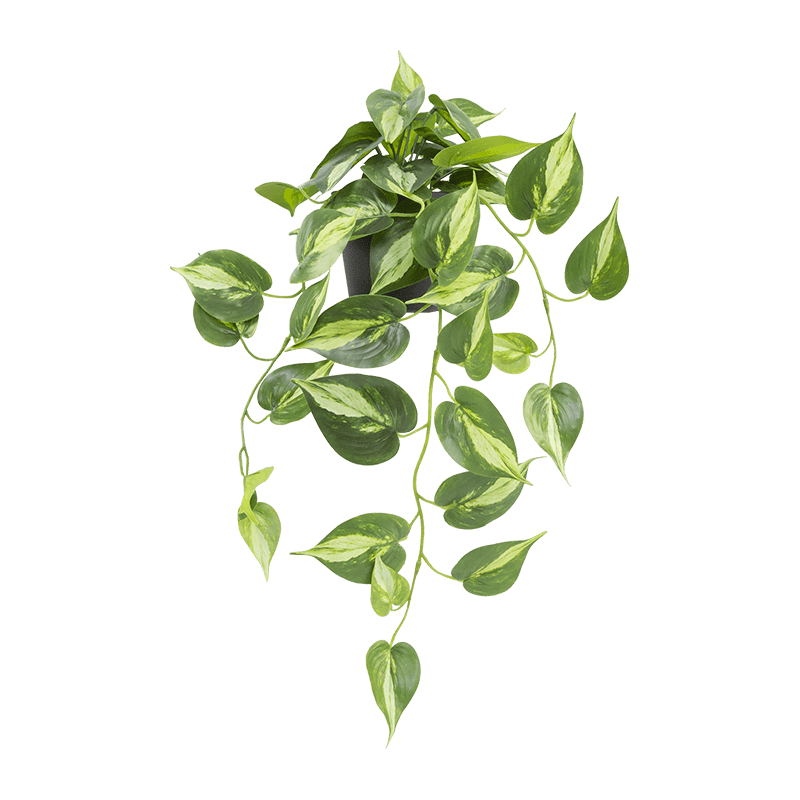
- Greenery and foliage - hanging plants, trailing vines, succulents, and mixed greenery used to fill arrangements.
- Grass and hedge products - lawn rolls, hedge panels, and wall greenery for landscaping and commercial fit-outs. See artificial grass lawn.
- Seasonal ranges - Christmas trees and holiday collections, which follow a completely different buying calendar. See Christmas tree.
Step 1 - Define the Product Mix Before Requesting Quotes
The biggest time loss in sourcing is sending a vague inquiry and receiving a catalogue back. Before contacting factories, define three things: the product families you need, the price tiers you want to cover, and the retail or project context the products will be used in.
A workable retail collection usually covers more than one price point. Entry-level items attract foot traffic, mid-tier items carry the margin, and one or two premium items (for example real-touch or large-scale statement plants) anchor the range. Factories can quote each tier separately, but only if they understand the structure you are building.
It also helps to state the market. Buyers selling into Northern Europe, North America, the Middle East, and Southeast Asia often need different colour palettes, sizes, and packaging standards for the same product.
Step 2 - Understand Materials and What They Mean for Price and Lifespan
Material choice drives both cost and how the product performs once it reaches the customer. The main options are:
PU (polyurethane) "real touch" - soft, flexible, and closest to the feel of a natural petal. Used for higher-end stems and orchids. Higher cost per stem, so usually aimed at premium retail and hotel projects.
PE (polyethylene) - a firmer plastic finish, widely used for outdoor-tolerant plants, grass, and foliage where weather resistance matters more than a soft touch.
Silk and polyester fabric - the classic artificial flower surface. Offers a wide colour range and good value, but varies in quality, so fabric weight and colour fastness should be checked on the sample.
PVC and mixed plastic - common in grass, hedges, and structural foliage.
Two specifications are worth confirming in writing for every outdoor or semi-outdoor order: UV treatment (which slows fading) and, where required by the project, fire-retardant treatment. Indoor decorative products used in commercial spaces may also be subject to fire-safety requirements in the destination market. Ask what documentation the factory can provide rather than assuming it exists.
Step 3 - Quality Checks to Run Before Placing a Bulk Order
Artificial plants are hand-assembled products, so quality is decided by process control rather than by a single specification. On a sample, check the points that most often turn into customer complaints:
- Colour consistency - ask for at least three pieces of the same SKU. Dye lot differences are the most common cause of returns.
- Petal and leaf attachment - pull gently on petals and leaves. Poorly glued pieces fall off during shipping or in the customer's hands.
- Stem and wire strength - the stem should hold its bend and support the head without drooping.
- Pot stability and weight - a light pot tips over easily, which is a frequent complaint on potted plants and small trees.
- Shape memory - pack the sample back into its carton, leave it for a few days, then reopen it. Real-touch products should recover their shape.
- Finish details - glue visible at the joint, loose threads, and uneven colour at the edge all suggest a factory running without a final inspection step.
A factory that sends photos and a written QC summary with the sample is usually the one that will also control quality on the production run.
Step 4 - MOQ, Quotation Terms and Sampling
MOQ (minimum order quantity) in the artificial plant industry is normally set per SKU and sometimes per colour, not per order. That means a "MOQ 300" order may in practice require 300 pieces of each style you select. Clarify this before you plan a mixed container, because it is the single most common misunderstanding in first orders.
Other terms to settle in writing:
- Sample cost and whether it is refundable against a bulk order.
- Sampling lead time, and production lead time after deposit - separate numbers, not one combined figure.
- Trade terms - EXW, FOB, CIF, or DDP. FOB is the most common starting point for container orders, but confirm which port and which costs are included.
- Payment terms - typically a deposit with the balance paid against the bill of lading or before shipment. Confirm this early, as it affects your cash flow planning.
- Order tolerance - the acceptable over- or under-production percentage.
A well-structured inquiry contains: product references, quantity per SKU, target price range, destination country, packaging requirements, and required delivery window. Inquiries with these details get accurate quotations instead of rough estimates.
Step 5 - Customisation Options for OEM and ODM Orders
Once volumes are stable, customisation is where margin is usually created. Common options include:
- Colour matching against a Pantone reference or a physical swatch, so a collection stays consistent across seasons.
- Size and head-count adjustments - taller stems, more heads per stem, or larger overall dimensions for a specific retail price point.
- Packaging and private label - printed hang tags, barcodes, gift boxes, and retail-ready inner packaging that lets you ship straight to store.
- New designs developed from your reference samples, sketches, or images.
Custom projects need more lead time and usually a higher MOQ, because they involve new tooling or new dye batches. For more detail on how development orders work, see artificial flower manufacturer for custom designs.
Step 6 - Packaging and Shipping for Bulk Orders
Packaging decisions determine how much product fits into a container, and therefore your landed cost per unit. Three points matter most:
Carton specification. Ask for the carton dimensions and the number of pieces per carton. A carton that is 5 cm too large across 40 cartons wastes measurable space.
Internal protection. Artificial plants are bulky but fragile at the petal and pot. Individual wrapping, inner dividers, and an inflation bag where needed prevent the "arrived crushed" problem that destroys retail value.
Loading plan. A 40HQ container holds roughly 68 cubic metres, but artificial plants are volume-limited, not weight-limited - so cubic metres, not kilograms, is the number you should be optimising. Ask the factory for a loading plan before confirming the order if you are mixing several SKUs.
For mixed orders, confirm how SKUs will be separated and labelled, so that unpacking at the warehouse does not turn into a sorting project.
Step 7 - Compliance and Paperwork for Import
Documentation requirements depend on the destination market and on how the goods will be declared. Typical export documents include the commercial invoice, packing list, bill of lading, and certificate of origin, and some markets also require specific test reports.
Buyers frequently ask suppliers for material composition statements, test reports for restricted substances, and, for products intended for use around children or in public spaces, relevant safety documentation. Availability varies by product and by material, so the practical approach is to request the documents you need at the quotation stage and confirm they can be issued with the shipment.
It is also worth confirming responsibility for customs clearance and duties. Under EXW and FOB terms that responsibility sits with the buyer; under DDP it sits with the supplier. Whichever term you use, make sure it is written on the proforma invoice.
Step 8 - How to Compare Fake Plant Suppliers
Price alone is a poor comparison basis, because a cheaper quotation usually means fewer stems per pot, thinner fabric, or lighter packaging. Compare suppliers on these points instead:
- Width of the product range, and whether it stays stable between seasons.
- Response time and quality of communication during the sample stage.
- Whether QC is documented, and whether the factory sends production photos.
- Packaging standard, and willingness to adapt it to your retail requirement.
- Flexibility on MOQ for a first trial order, and clarity about how it changes for repeats.
- Reference markets and product categories already supplied.
Why Buyers Source From a China Artificial Plant Factory
China remains the largest production base for artificial flowers, plants, and greenery, which means material choice, mould development, and component supply are all available in one region. Working directly with a manufacturer rather than through trading layers gives buyers access to new designs earlier, better control over specifications, and a clearer path to custom packaging and private label.
Zhejiang Hansy Craft Co.,Ltd. is an artificial flower and artificial plant manufacturer based in Zhejiang, China, supplying artificial flowers, potted plants, trees, hanging plants, grass lawn, and Christmas items to buyers in Europe, North America, and Southeast Asia. You can review the production process on our factory page and the full product range in the products section.
Quick Checklist Before You Send an Inquiry
1. Product families and SKUs you want to price.
2. Quantity per SKU, and the MOQ you can realistically commit to for a first order.
3. Destination country and required delivery window.
4. Material and finish preference (real touch, standard, UV-treated, fire-retardant).
5. Packaging requirements, including private label and barcodes.
6. Documents you need with the shipment.
7. Target landed cost, so the factory can propose a specification that reaches it.
If you send those seven points, you will receive comparable quotations instead of catalogue links - which makes the decision much faster.
To discuss a bulk fake plants order, a mixed container, or a custom development project, contact us with your product list and target quantities and we will come back with a quotation and a sampling plan.
-
 2026/09/18
Artificial Flowers From China for Wholesale Buyers
2026/09/18
Artificial Flowers From China for Wholesale Buyers
Artificial flowers from China are widely considered by wholesalers, importers, retailers, distributors, event suppliers, and interior decoration businesses. Buyers often look for product collections that can serve different customer groups and decoration applications. Instead of purchasing a single floral style, wholesale customers may need flower stems, bouquets, arrangements, wreaths, garlands, and greenery within one product range.
Wholesale purchasing also involves several factors beyond flower appearance. Buyers may review material choices, product construction, available colors, packaging methods, sample procedures, order requirements, and shipping arrangements. A clear understanding of these elements can make supplier communication easier and help buyers organize their purchasing plans.
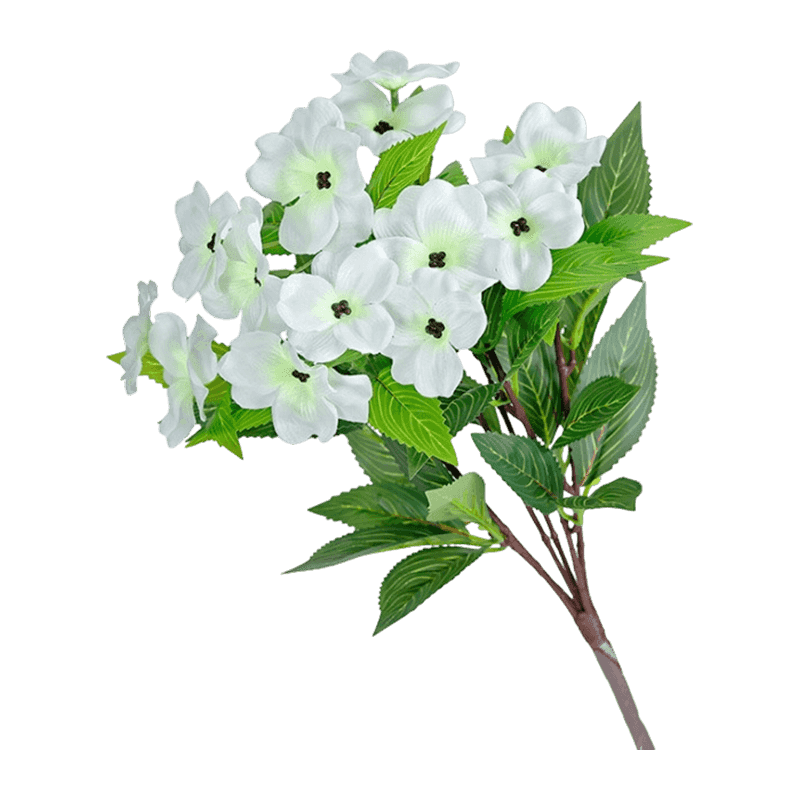
Artificial roses, peonies, tulips, orchids, hydrangeas, sunflowers, eucalyptus, and other floral styles can be combined into collections for different markets. Retail stores may prefer individual stems and ready-made bouquets, while event suppliers may require arrangements suitable for venues and decorative installations.
Product Selection for Wholesale Orders
Product variety is an important consideration when preparing a wholesale collection. Individual artificial flower stems can be used by customers who prefer to create their own arrangements. These products can also be supplied to florists, decorators, hotels, restaurants, and retail stores.
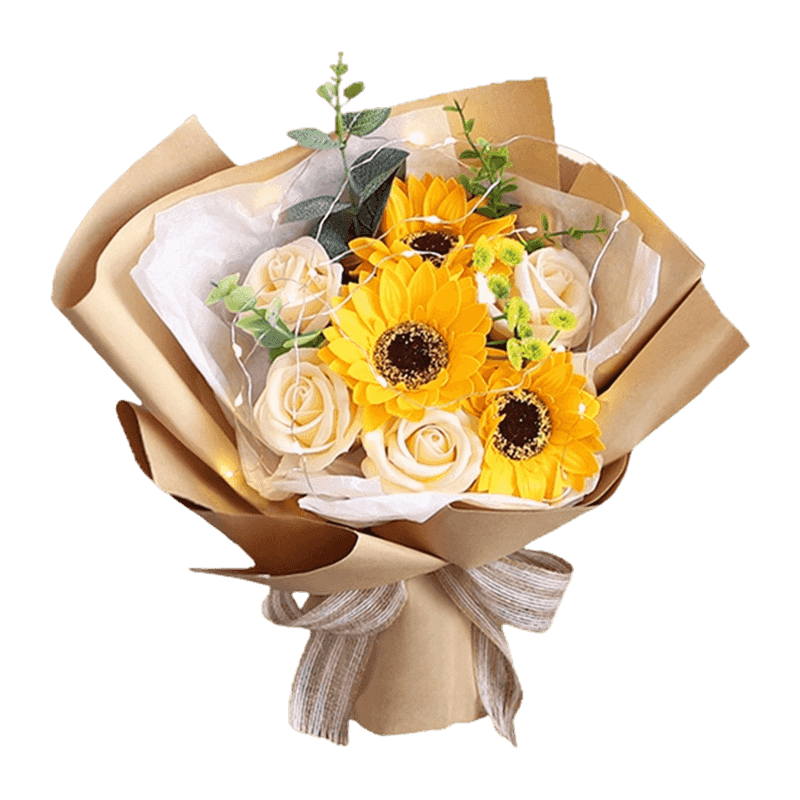
Artificial bouquets provide a ready-made decorative option. They can combine flowers, leaves, branches, and other elements into a coordinated arrangement. Buyers can select different colors and flower combinations according to the needs of their target market.
Artificial garlands and wreaths serve different decorative purposes. Garlands can be used around tables, walls, windows, arches, and display areas. Wreaths can be used for doors, walls, seasonal decoration, and event displays.
Artificial greenery is another useful category for wholesale buyers. Eucalyptus branches, vines, leaves, and other foliage can be combined with flowers or sold separately. Greenery can also help create a fuller appearance in decorative arrangements.
Materials and Product Construction
Artificial flowers can be produced with fabric, polyester, latex, PE, and other synthetic materials. Each material can provide different characteristics in terms of texture, shape, flexibility, and appearance.
Fabric and polyester materials are commonly used for petals and leaves because they can be formed and colored in various ways. Latex can provide a different surface feel, while PE can be molded into defined floral structures.
The material should correspond with the intended application. Indoor decorative products may have different requirements from products used in event venues or covered outdoor areas. Buyers can discuss material selection with the factory according to product design and application.
Product construction also deserves attention. The connection between the flower head and stem should correspond with the product design. Leaves should be attached securely, while bouquets should maintain their intended arrangement during normal handling.
Choosing a Suitable China Supplier
When sourcing artificial flowers from China, buyers can review several aspects of a supplier before placing a wholesale order. Product categories, production capabilities, sample procedures, customization services, packaging options, and communication processes can all influence the purchasing experience.
Samples allow buyers to inspect the physical product before ordering in larger quantities. The review can cover flower shape, color, material, stem structure, surface appearance, and packaging.
Buyers can also ask about OEM and ODM services when they need customized products. Custom requirements may include flower shape, color, size, material, bouquet arrangement, logo placement, and packaging.
Clear product specifications are useful during supplier communication. Product names, reference images, material requirements, colors, sizes, packaging instructions, and application information can help both sides understand the order.
Wholesale Packaging and Shipping
Artificial flowers require suitable packaging because petals, leaves, stems, and decorative components can be affected by pressure during handling and transportation. Individual stems may require protective sleeves, while bouquets may require packaging that helps preserve their shape.
Wreaths and garlands may need cartons with suitable internal space. Retail boxes can also be used when products are intended for direct store display.
Shipping arrangements should be considered together with packaging. Buyers may select sea freight, air freight, LCL, or FCL according to their order requirements and destination.
After receiving the goods, buyers can organize products by flower type, color, collection, and application. Proper storage can help preserve the appearance of artificial flowers and make inventory management easier.
-
 2026/09/11
Artificial Flower Manufacturer for Custom Designs
2026/09/11
Artificial Flower Manufacturer for Custom Designs
Standard artificial flowers can serve many decoration needs, but some buyers require designs that match a particular theme, color system, interior concept, or retail collection. Custom artificial flowers are therefore used by wedding planners, hotels, event companies, retailers, interior designers, and distributors.
An artificial flower manufacturer can develop products according to specific requirements covering flower shape, color, size, material, stem structure, foliage, arrangement, and packaging.
Customization can also help buyers create a coordinated product collection. Several flower styles can share similar colors, materials, packaging, or design elements while serving different decorative applications.
Custom Flower Shapes and Colors
Flower shape is one of the key areas of customization. Buyers may provide reference images or physical samples to show the desired petal structure, flower center, leaf form, or overall appearance.
Color can also be adjusted according to a buyer's requirements. Custom colors may be used for wedding themes, hotel interiors, retail collections, seasonal displays, and event decoration.
A custom color system can include flowers, leaves, stems, wrapping materials, and other decorative components. This allows several products within the same collection to maintain a coordinated appearance.
Buyers can also request different flower sizes. A large flower arrangement may require larger floral heads, while table decorations can use smaller flower forms.
Materials and Product Structure
Material selection is another important part of custom product development. Fabric, polyester, latex, PE, and other materials can be selected according to the required flower structure and surface appearance.
Fabric and polyester can be used for petals and leaves with different shapes and textures. Latex can provide a different tactile effect, while PE can support molded floral components.
Stem construction can also be adjusted. Buyers may request specific stem lengths, colors, flexibility, or connection methods depending on how the product will be displayed.
For bouquets, the arrangement of individual stems, flowers, and foliage can be customized. The buyer can specify the flower combination, color arrangement, wrapping style, and overall shape.
Custom Product Development
Custom development can begin with a drawing, photograph, physical sample, color reference, or written product description. The more clearly the requirements are presented, the easier it can be for the production team to understand the intended design.
The manufacturer can review the requirements and discuss suitable materials and production methods. Product details such as flower dimensions, petal structure, leaf placement, stem length, and color can then be confirmed.
A sample can be produced for review. Buyers can examine the physical sample and compare it with the requested design.
If adjustments are needed, changes can be made to the flower shape, color, material, size, stem, foliage, or packaging. This stage allows both sides to confirm the product before batch production.
OEM and ODM Projects
OEM projects allow buyers to develop artificial flowers according to their own product specifications and brand requirements. ODM projects can involve product development based on a manufacturer's existing production capabilities and design resources.
Brand elements can be incorporated into labels, packaging, product cards, stickers, boxes, and other presentation materials.
Private-label buyers may request custom packaging alongside custom flowers. The packaging can include a brand name, product description, care information, barcodes, or other information required for retail distribution.
Clear approval procedures are useful for these projects. Product specifications, artwork, samples, and packaging details can be documented before production begins.
Custom Flowers for Weddings and Events
Wedding decoration is a common application for customized artificial flowers. Wedding planners can request specific flower colors and combinations to match venue decoration, table settings, fabrics, lighting, and other visual elements.
Custom bouquets can be prepared for reception areas, tables, entrances, stages, and photo areas. Floral arches, wall displays, hanging decorations, and centerpieces can also use customized flower products.
Event companies may require coordinated products for different areas of the same venue. Matching colors and flower styles can help create a consistent decorative theme.
Custom Flowers for Commercial Spaces
Hotels, restaurants, retail stores, and commercial interiors can also use customized artificial flowers. Product dimensions can be designed around available spaces such as reception counters, tables, display windows, shelves, and entrance areas.
Retailers may use custom flowers for seasonal collections or promotional displays. Hotels may request arrangements that correspond with their interior design.
When a buyer plans to reorder the same product, an approved sample and detailed product specification can provide a reference for later production. This can help maintain consistency across different orders.
-
2026/09/04
Artificial Flower Manufacturer for Wholesale Orders
Artificial flowers are widely used by retailers, distributors, event decorators, interior designers, hotels, restaurants, and home decoration businesses. For these buyers, working with an artificial flower manufacturer can provide access to a broader product range and a structured purchasing process.
Wholesale buyers often need more than a single flower style. A retail collection may include individual stems, bouquets, decorative arrangements, wreaths, garlands, and artificial greenery. Offering several product categories allows buyers to build collections for different customer preferences and decoration settings.
Individual stems can be used by customers who create their own floral arrangements. Bouquets provide a ready-made decorative option, while wreaths and garlands can be used for walls, doors, tables, windows, and seasonal displays. Artificial greenery can also be combined with flowers or sold as an independent decorative product.
Product Selection for Wholesale Orders
Product selection is an important stage in wholesale purchasing. Buyers can review flower types, colors, materials, sizes, stem structures, and arrangement styles before preparing an order.
Common artificial flowers include roses, peonies, tulips, orchids, hydrangeas, lilies, sunflowers, and other decorative varieties. Foliage products can include eucalyptus branches, vines, leaves, and decorative stems.
Different customers may have different requirements. A home decoration retailer may prefer individual flowers and small bouquets, while an event supplier may need larger arrangements or coordinated floral collections.
Wholesale buyers can also consider seasonal demand when preparing a product range. Floral colors and arrangements can be selected according to wedding decoration, holiday decoration, spring collections, autumn displays, or general interior decoration.
Choosing an Artificial Flower Manufacturer
Supplier selection involves several factors. Buyers can review the manufacturer's product categories, production capabilities, sample process, customization services, packaging options, and communication procedures.
A factory that handles production internally can provide buyers with a clearer production process. Buyers may ask about the production of flower heads, petals, leaves, stems, bouquets, and other components.
Samples are useful before a wholesale order is confirmed. A physical sample allows buyers to check the flower shape, material, color, size, stem structure, and general appearance.
For customized orders, buyers can also discuss OEM and ODM requirements. These may include flower colors, dimensions, materials, bouquet arrangements, labels, logos, and packaging.
Clear communication can help both sides understand the product requirements. Buyers can prepare product names, reference images, colors, sizes, materials, packaging instructions, and other specifications before sending an inquiry.
Wholesale Order Preparation
A wholesale order can be organized around several product details. Buyers can prepare a product list that includes the selected flower styles, colors, materials, sizes, and packaging requirements.
If several products are ordered together, each item can be assigned a product code or clear description. This can make communication and inventory management easier.
Buyers can also discuss packaging before production begins. Individual stems may require protective sleeves, while bouquets may need wrapping that helps preserve their arrangement. Wreaths and garlands can require larger cartons with suitable internal space.
Labels and printed materials can also be discussed for retail products. Product names, care information, packaging artwork, and brand elements can be incorporated according to the buyer's requirements.
Batch Production and Order Management
After the product specifications are confirmed, the manufacturer can prepare the production process. Materials can be arranged according to the approved product requirements, while production teams can follow samples and specifications during assembly.
Quality checks can take place throughout production. Flower shape, color, petal arrangement, leaf attachment, stem connection, and overall appearance can be reviewed before products are packed.
Wholesale buyers can also request pre-shipment inspection according to their purchasing requirements. This allows product appearance and packaging to be checked before the shipment leaves the factory.
Packaging and Shipment
Packaging plays an important role in wholesale artificial flower orders. Petals, leaves, stems, and decorative components can be affected by pressure during handling, so packaging should correspond with the structure of each product.
Individual flowers can be separated into protective packaging. Bouquets can be wrapped according to their shape, while wreaths and garlands can be arranged inside cartons with suitable internal protection.
For international orders, buyers can discuss sea freight, air freight, LCL, or FCL according to their shipping plans. Carton dimensions and packing arrangements can also be reviewed before shipment.
After arrival, buyers can organize products by flower type, color, collection, and application. Proper storage and inventory organization can make wholesale distribution easier and help preserve the appearance of artificial flowers.
-
2026/08/28
Artificial Flowers China Materials and Production Process
Artificial flowers are widely used in home decoration, commercial spaces, wedding arrangements, gift collections, and seasonal displays. Behind each floral product is a combination of material selection, design planning, production techniques, and quality management.
For businesses searching for Artificial Flowers China, understanding the manufacturing process can help buyers communicate their requirements more clearly and select suitable products for different applications. The production of artificial flowers involves multiple steps, from choosing materials and creating flower structures to assembling components and preparing packaging.
China has developed a broad manufacturing network for decorative floral products, offering different styles, materials, and production methods for global markets. Suppliers work with buyers to develop products that match specific design concepts, customer preferences, and business applications.
Common Materials Used in Artificial Flowers
Material selection is an important part of artificial flower production. Different materials create different textures, appearances, and product characteristics.
Fabric Materials for Flower Petals
Fabric materials are commonly used for creating flower petals and leaves. Different fabrics can provide various visual effects, including:
- Soft petal surfaces
- Flexible flower structures
- Decorative textures
- Different color appearances
Manufacturers select suitable fabric types according to flower designs and application requirements.
Fabric-based artificial flowers are often used in:
- Home decoration
- Wedding arrangements
- Gift products
- Retail collections
The choice of fabric can influence the overall look and feel of the final product.
Silk-Like Materials for Decorative Flowers
Silk-like materials are commonly used in artificial flower production because they can create smooth surfaces and detailed petal designs.
These materials are suitable for products such as:
- Artificial roses
- Artificial orchids
- Decorative bouquets
- Floral arrangements
Manufacturers can adjust the material style according to customer requirements, helping create products suitable for different decoration themes.
Silk-like artificial flowers are often selected for projects that focus on visual presentation and decorative effects.
Plastic Components in Artificial Flower Production
Plastic parts are commonly used for structural components in artificial flowers. These parts help support flower shapes and connect different elements.
Common uses include:
- Flower stems
- Leaf structures
- Internal supports
- Decorative accessories
Plastic components help maintain product structure during transportation, storage, and display.
Manufacturers carefully select suitable plastic materials according to product design and usage requirements.
Foam Components and Wire Structures
Some artificial flowers use foam materials to create special shapes and decorative details. Foam components can help form specific flower structures and add different textures.
Wire structures are also widely used in flower stems. They provide flexibility and allow users to adjust flower arrangements according to decoration needs.
These materials are often combined with other components to create complete floral products.
Flower Design and Manufacturing Techniques
The appearance of artificial flowers depends on production techniques and design details. An Artificial Flowers China supplier usually combines creative design with manufacturing methods to create different floral styles.
Petal Shaping Process
Petal shaping is an important step in creating artificial flowers. During this process, manufacturers focus on:
- Petal curves
- Flower layers
- Shape adjustment
- Overall structure
Different shaping methods can create different flower appearances.
Color Processing
Color design plays an important role in artificial flower production. Manufacturers may create different color effects, such as:
- Single-color designs
- Mixed color combinations
- Seasonal color themes
- Decorative color styles
Color selection is often based on customer requirements and market applications.
Texture Development
Texture details can improve the visual appearance of artificial flowers. Production teams may focus on:
- Petal surface details
- Leaf patterns
- Natural-inspired shapes
- Decorative elements
These details help create products suitable for different environments.
Main Steps of Artificial Flower Production
The production process of Artificial Flowers China products includes several important stages.
Product Design Preparation
Production usually begins with product planning and design discussion.
This stage may include:
- Flower style selection
- Product concept development
- Material planning
- Color discussion
Businesses can share their ideas and application needs with suppliers during this stage.
Material Preparation
After design planning, manufacturers prepare suitable materials.
This includes:
- Fabric selection
- Component preparation
- Color arrangement
- Production planning
Proper material preparation helps ensure smooth production.
Flower Forming and Assembly
During production, different components are shaped and combined.
The process may include:
- Petal forming
- Leaf attachment
- Stem assembly
- Decorative element installation
Careful assembly helps create complete artificial flower products.
Packaging Preparation
After production, artificial flowers are prepared for different sales channels.
Packaging options may include:
- Retail boxes
- Protective packaging
- Gift packaging
- Product information materials
Suitable packaging helps products arrive safely and supports different market requirements.
Quality Management During Manufacturing
Quality management is an important part of artificial flower production. Suppliers usually check different aspects during manufacturing.
Material Inspection
Materials are reviewed before production to ensure they match product requirements.
Inspection areas may include:
- Material appearance
- Color consistency
- Component condition
- Flower Shape Checking
Manufacturers check flower structures during production.
Common review points include:
- Petal arrangement
- Product appearance
- Component connection
- Overall design
Color Review
Color checking helps ensure products match approved designs.
Manufacturers review:
- Flower colors
- Decorative details
- Product consistency
- Packaging Inspection
Before products are prepared for shipment, packaging details are checked.
This may include:
- Package appearance
- Product placement
- Label information
- Protection methods
Material Selection for Different Markets
Different industries have different requirements for artificial flowers.
Home Decoration Market
Home decoration businesses often focus on:
- Interior matching
- Decorative styles
- Seasonal collections
Artificial flowers are commonly used in living rooms, bedrooms, and other indoor spaces.
Wedding and Event Market
Wedding suppliers often require floral products for:
- Wedding bouquets
- Venue decoration
- Event themes
Customized designs help create suitable decoration solutions.
Commercial Decoration Market
Hotels, restaurants, and offices use artificial flowers for:
- Interior displays
- Reception areas
- Decorative spaces
Products need to match different design environments.
Gift Market
Gift companies may use artificial flowers for:
- Holiday products
- Decorative gifts
- Special occasion collections
Packaging and design are important factors for gift applications.
Supporting Global Buyers with Artificial Flower Manufacturing
For businesses searching for Artificial Flowers China, understanding materials and production methods helps create better cooperation with suppliers. From fabric selection and flower shaping to assembly and packaging, every stage contributes to the final product design.
Through suitable materials, customized production methods, and organized manufacturing processes, artificial flower suppliers can support different industries with decorative products for homes, events, commercial spaces, and retail markets.
-
 2026/08/21
Artificial Flowers China for Wholesale Custom Solutions
2026/08/21
Artificial Flowers China for Wholesale Custom Solutions
Artificial flowers have become a popular choice for decoration, retail collections, event arrangements, and gift products. Many international buyers are looking for reliable supply channels that can provide various floral styles, customized designs, and flexible product solutions. Artificial Flowers China has become a common search term for businesses that want to explore manufacturing resources and product development opportunities.
China’s artificial flower industry covers a wide range of products, from decorative bouquets and individual flowers to artificial plants and complete floral arrangements. These products are used in many fields, including home decoration, wedding planning, hospitality spaces, retail stores, and promotional activities.
For overseas buyers, working with suppliers from China provides access to different product styles and manufacturing services. Businesses can communicate their ideas, choose suitable flower designs, and develop collections that match their market requirements.
Different Types of Artificial Flowers Available in China
One important reason buyers search for Artificial Flowers China is the variety of available products. Different industries have different requirements, and suppliers can provide floral products for various applications.
Artificial Flower Bouquets
Artificial bouquets are widely used for decoration and gift purposes. They can include different combinations of flowers, leaves, and decorative elements.
Common bouquet styles include:
- Wedding bouquets
- Home decoration bouquets
- Seasonal floral collections
- Gift flower arrangements
Businesses can select colors, flower types, and arrangement styles based on customer preferences.
Artificial Single Flowers
Single artificial flowers provide flexibility for different projects. Popular options include:
- Artificial roses
- Artificial orchids
- Artificial tulips
- Artificial lilies
These flowers can be displayed individually or combined with other decorative elements.
Artificial Plants and Greenery
Artificial plants are commonly used in interior decoration. Products may include:
- Artificial leaves
- Decorative branches
- Green plants
- Hanging plant designs
They are suitable for homes, offices, hotels, and commercial environments.
Custom Floral Arrangements
Some projects require special floral concepts. Customized arrangements may include:
- Table decorations
- Event displays
- Interior decoration pieces
- Seasonal themes
Manufacturers can work with buyers to develop designs based on specific requirements.
Wholesale Solutions for International Buyers
Many businesses search for Artificial Flowers China because they need wholesale supply options for their markets. Wholesale cooperation allows retailers, distributors, and decoration companies to build product collections with different styles and categories.
Product Collection Development
Wholesale buyers may require various floral products within a collection. Suppliers can support product planning through:
- Different flower categories
- Matching decorative items
- Coordinated color themes
- Seasonal product concepts
This approach helps businesses prepare suitable products for different customer groups.
Flexible Product Selection
Different markets have different decoration preferences. Buyers may select products according to:
- Home decoration styles
- Event themes
- Retail trends
- Customer interests
A wide product selection helps businesses create collections that fit their sales channels.
Custom Artificial Flower Development Services
Customization is an important part of artificial flower purchasing. An Artificial Flowers China supplier can provide support for businesses that need personalized products.
Custom Flower Designs
Businesses may request specific floral styles, including:
- Special flower shapes
- Unique arrangements
- Decorative combinations
- Theme-based designs
Manufacturers can review design ideas and develop suitable product solutions.
Color Customization
Colors play an important role in floral products. Buyers may require colors that match:
- Brand styles
- Interior designs
- Event themes
- Seasonal concepts
Color adjustment services help businesses create products that match their target markets.
Private Label Products
Some businesses prefer products with their own brand identity. Private label services may include:
- Brand packaging
- Product labels
- Customized presentation
- Collection design
This allows retailers and brands to create personalized floral products.
Packaging Options for Artificial Floral Products
Packaging is an important part of product presentation. Different markets require different packaging styles depending on sales channels and customer expectations.
Retail Packaging
Retail products may use packaging solutions such as:
- Paper boxes
- Display packaging
- Product cards
- Decorative sleeves
These options help present product information clearly.
Gift Packaging
Gift products often require attractive packaging designs. Options may include:
- Decorative boxes
- Special wrapping
- Greeting cards
- Theme-based packages
Customized packaging can help products fit different occasions.
Shipping Packaging
For international transportation, packaging design needs to support product protection and convenient handling. Suppliers can prepare suitable packaging methods based on shipping requirements.
Cooperation Process with China Artificial Flower Suppliers
Working with an Artificial Flowers China supplier usually involves several stages.
Product Communication
Buyers share information about:
- Product ideas
- Market requirements
- Design preferences
- Packaging needs
This helps suppliers understand project expectations.
Design Discussion
After reviewing requirements, both sides can discuss:
- Flower styles
- Material choices
- Color options
- Product combinations
- Sample Review
Samples allow buyers to check product details, including:
- Appearance
- Structure
- Materials
- Packaging presentation
- Production Preparation
After confirmation, suppliers arrange production procedures, material preparation, and packaging plans.
Supporting Different Market Applications
Artificial flowers from China are used across many industries and business fields.
Home Decoration Businesses
Home decoration brands use artificial flowers for:
- Interior styling
- Seasonal decoration
- Lifestyle collections
- Wedding and Event Suppliers
Event companies often need floral products for:
- Wedding arrangements
- Venue decoration
- Theme events
- Retail and Online Sellers
Retailers and e-commerce businesses use artificial flowers for:
- Product collections
- Decorative items
- Gift categories
- Hospitality Spaces
Hotels, restaurants, and commercial spaces use floral products to create attractive environments.
Developing Artificial Floral Collections for Global Markets
The demand for Artificial Flowers China continues to grow as businesses search for flexible decoration products and customized floral solutions. Through wholesale cooperation, personalized designs, and suitable packaging options, international buyers can develop collections for different applications.
From home decoration and event planning to retail and gifting markets, artificial flowers provide businesses with many possibilities for creating decorative product lines that match customer needs.
-
 2026/08/14
Artificial Flower Manufacturer Materials and Production Guide
2026/08/14
Artificial Flower Manufacturer Materials and Production Guide
Artificial flowers are widely used in home decoration, commercial spaces, wedding arrangements, gift collections, and seasonal displays. Behind each floral product is a manufacturing process that combines material selection, design planning, production techniques, and quality management.
For businesses looking for customized floral products, working with an Artificial Flower Manufacturer provides opportunities to explore different flower styles, materials, and production methods. Understanding how artificial flowers are made can help buyers communicate their requirements and select suitable solutions for different applications.
From realistic petal structures to decorative arrangements, artificial floral products involve multiple production steps. Each stage influences the appearance, function, and presentation of the final product.
Common Materials Used in Artificial Flowers
Material selection plays an important role in artificial flower production. Different materials create different textures, appearances, and usage experiences.
Fabric Materials
Fabric is commonly used for artificial flower petals and leaves. Different fabric types can create various visual effects, including:
- Soft petal surfaces
- Natural-looking shapes
- Flexible structures
- Decorative textures
Manufacturers select suitable fabrics according to the flower design and application requirements.
Silk-Like Materials
Silk-like materials are often chosen for floral products that require a smooth appearance and detailed petal designs. These materials can help create decorative flowers suitable for:
- Home interiors
- Wedding arrangements
- Gift products
- Display projects
The material choice depends on the desired style and product concept.
Plastic Components
Plastic parts are often used for flower stems, leaves, and structural elements. These components provide support and help maintain product shape during use.
Common applications include:
- Stem structures
- Leaf connections
- Decorative accessories
- Foam Materials
Foam components may be used in certain artificial flower designs to create specific shapes and textures. They are often applied in decorative arrangements that require special forms.
Wire Stems
Wire elements are commonly used inside flower stems to provide flexibility. They allow users to adjust arrangements according to different decoration needs.
Flower Petal Design and Manufacturing Techniques
The appearance of artificial flowers depends greatly on production techniques. An Artificial Flower Manufacturer uses different methods to create detailed floral designs.
Petal Shaping
Petal shaping is an important process that affects the overall flower appearance. Manufacturers may adjust:
- Petal curves
- Flower structure
- Layer arrangements
- Natural forms
This process helps create different flower styles for various applications.
Color Treatment
Color design influences the visual effect of artificial flowers. Production teams may use different methods to create:
- Single-color flowers
- Multi-color designs
- Gradient effects
- Seasonal themes
Color customization allows businesses to develop floral products that match specific design concepts.
Texture Processing
Texture details help improve the appearance of artificial flowers. Manufacturers may focus on:
- Petal surface details
- Leaf patterns
- Shape consistency
- Decorative elements
These details contribute to the overall presentation of floral products.
Assembly Methods
Artificial flower assembly involves combining different components, such as:
- Petals
- Leaves
- Stems
- Decorative parts
Careful assembly helps create complete floral products suitable for different markets.
Main Steps of Artificial Flower Production
The production process of artificial flowers includes several stages from design preparation to packaging.
Product Design Preparation
The process begins with product concepts and design planning. Businesses may provide ideas based on:
- Market needs
- Decoration themes
- Customer preferences
- Seasonal collections
Manufacturers review these requirements and prepare suitable production plans.
Material Preparation
After design confirmation, suitable materials are selected and prepared. This stage includes:
- Fabric selection
- Color preparation
- Component arrangement
- Production planning
Material preparation helps maintain consistency throughout manufacturing.
Flower Forming Process
During this stage, different parts are shaped and prepared according to the product design.
The process may involve:
- Petal creation
- Leaf forming
- Stem preparation
- Component matching
- Assembly Process
Individual parts are combined into complete flowers or arrangements. This stage requires attention to:
- Structure
- Appearance
- Component connection
- Overall design
- Packaging Preparation
After production, products are prepared for different sales channels. Packaging may include:
- Retail boxes
- Protective materials
- Product information cards
- Decorative packaging
Quality Checking During Production
Quality management is an important part of artificial flower manufacturing. An Artificial Flower Manufacturer usually checks different aspects throughout production.
Color Inspection
Manufacturers review flower colors to ensure they match approved designs and customer requirements.
Shape Checking
Flower structures are examined to check:
- Petal arrangement
- Product appearance
- Component connection
- Overall presentation
Material Review
Material inspection helps confirm that selected components match project requirements.
Packaging Inspection
Before products are prepared for shipment, packaging details are reviewed, including:
- Product placement
- Package appearance
- Label information
- Protection methods
Material Selection for Different Applications
Different industries have different expectations for artificial floral products.
Home Decoration
Home decoration projects often focus on:
- Natural-inspired designs
- Interior matching
- Long-term decorative use
- Wedding Projects
Wedding suppliers may require:
- Bouquet designs
- Venue decoration styles
- Theme-based floral arrangements
- Commercial Spaces
Hotels, restaurants, and offices may use artificial flowers for:
- Interior decoration
- Reception areas
- Display spaces
- Gift Products
Gift companies often focus on:
- Decorative appearance
- Packaging presentation
- Special occasion themes
- Supporting Customized Artificial Flower Projects
The production of artificial flowers combines creative design, material knowledge, and manufacturing skills. An Artificial Flower Manufacturer can help businesses develop products that match different markets through customized designs, suitable materials, and organized production processes.
Understanding materials and manufacturing methods allows buyers to communicate their ideas more clearly and create floral products suitable for decoration, retail, events, and gifting applications.
-
 2026/08/07
Artificial Flower Manufacturer for Custom Floral Solutions
2026/08/07
Artificial Flower Manufacturer for Custom Floral Solutions
Artificial flowers have become an important choice for many decoration projects, retail collections, gift products, and event arrangements. Businesses across different industries are looking for floral products that match their brand style, customer preferences, and project requirements. Working with an Artificial Flower Manufacturer allows companies to develop customized floral solutions with flexible designs, different materials, and personalized presentation styles.
Compared with fresh flowers, artificial floral products provide convenience for long-term decoration projects and can be used in various environments. They are widely applied in homes, hotels, offices, wedding venues, retail spaces, and seasonal displays. For businesses that need special designs, customized production services can help create products that fit specific themes and market directions.
A professional manufacturer can support customers from early design discussions to finished product preparation. Through OEM and ODM cooperation, businesses can explore different flower styles, color combinations, packaging options, and product collections.
Different Types of Custom Artificial Flowers
An Artificial Flower Manufacturer can provide different floral products according to various business applications and customer needs.
Artificial Flower Bouquets
Artificial bouquets are widely used in home decoration, weddings, gifts, and commercial displays. Customized bouquet designs may include:
- Rose bouquets
- Mixed flower arrangements
- Seasonal flower collections
- Decorative floral combinations
Businesses can select flower styles and colors based on their target markets and product themes.
Artificial Single Flowers
Single artificial flowers offer flexibility for different decoration projects. Common choices include:
- Artificial roses
- Artificial tulips
- Artificial orchids
- Artificial lilies
These products can be used individually or combined into creative arrangements.
Artificial Plants and Greenery
Artificial plants are popular in interior decoration because they require simple maintenance. Product categories may include:
- Decorative leaves
- Artificial branches
- Green plant designs
- Indoor decorative plants
These products are suitable for homes, offices, hotels, and commercial spaces.
Custom Floral Arrangements
Many businesses require special floral designs for specific projects. Customized arrangements may include:
- Table decorations
- Event displays
- Wall decorations
- Seasonal themes
Manufacturers can help transform creative ideas into practical floral products.
Custom Flower Designs and Color Options
Design customization is an important part of artificial floral product development. An Artificial Flower Manufacturer can assist businesses in creating products with specific visual styles.
Flower Shape Development
Different flower structures can create different decorative effects. Custom projects may involve:
- Petal shapes
- Flower sizes
- Arrangement styles
- Decorative combinations
This allows businesses to create collections with unique appearances.
Color Customization
Color selection plays an important role in floral design. Businesses may request colors based on:
- Brand identity
- Interior styles
- Event themes
- Seasonal concepts
Custom color solutions help products match different decoration environments.
Theme-Based Floral Collections
Many markets require flowers with specific themes, such as:
- Wedding styles
- Holiday decorations
- Home lifestyle collections
- Nature-inspired designs
Manufacturers can support businesses in developing floral collections for different occasions.
OEM and ODM Services for Artificial Flower Projects
An Artificial Flower Manufacturer can provide OEM and ODM services to support businesses with different product development needs.
Product Concept Support
Manufacturers can work with customers to understand:
- Product ideas
- Target markets
- Design preferences
- Application environments
Based on these requirements, product concepts can be developed into practical solutions.
Sample Development
Sample creation helps businesses review product details before production preparation. This stage may involve:
- Flower appearance checking
- Material selection
- Color adjustment
- Arrangement review
Feedback during this process helps improve product details.
Customized Product Collections
Businesses may require multiple products for a complete collection. Manufacturers can support:
- Matching flower designs
- Related accessories
- Different packaging styles
- Seasonal product themes
This approach helps brands build organized floral product lines.
Custom Packaging Solutions for Floral Products
Packaging is an important part of artificial flower presentation. An Artificial Flower Manufacturer can provide packaging solutions for different sales channels.
Retail Packaging
Retail products may require packaging that helps customers understand product features and design concepts. Options may include:
- Paper boxes
- Product cards
- Display packaging
- Brand labels
- Gift Packaging
Gift markets often require attractive packaging designs. Customized solutions may include:
- Decorative boxes
- Special wrapping
- Product information cards
- Theme-based packaging
- Shipping-Friendly Packaging
For online sales and distribution channels, packaging design should support product protection and convenient handling.
Supporting Different Business Applications
Customized artificial flowers are used across many industries.
Floral Brands
Flower brands may develop unique collections with customized colors, arrangements, and packaging styles.
Home Decoration Companies
Interior decoration businesses often require floral products that match different design themes and spaces.
Wedding and Event Suppliers
Event companies may need customized bouquets, venue decorations, and themed floral arrangements.
Gift Businesses
Gift suppliers can create decorative floral products for different occasions and customer groups.
Building Long-Term Cooperation Through Custom Floral Solutions
The development of artificial floral products involves design planning, material selection, manufacturing processes, and packaging preparation. An Artificial Flower Manufacturer can help businesses explore different product ideas and create solutions suitable for various markets.
Through customized flower designs, flexible production services, and personalized packaging options, artificial floral products can support businesses in developing attractive collections for decoration, gifting, retail, and event applications.
 Ready To Customise
Your Realistic Plants Products?

-
Telephone: +86-15957939205

-
Email: jenny@hansycraft.com

-
Add: No. 185 Xigang Street, Xiaoshun Town, Jindong District, Jinhua City, Zhejiang Province, P.R.China

-
whatsapp: 8615957939205
-
Website: Sitemap
